5 Trends Shaping Real-Time Tracking in Logistics
Drafted with AI assistance and published by the Locate2u Editorial Team. See our editorial policy.

Real-time tracking used to mean one thing: a dot on a map in the dispatch office. That dot is still there, but the systems around it are changing quickly.
Some of the change is forced on fleets by networks and regulators. Some of it comes from customers, who now expect the kind of live updates their phones already give them.
Here are five trends that are reshaping how logistics businesses use real-time GPS tracking, each tied to something you can check for yourself, plus what to do about it.
1. Old mobile networks are switching off
Every GPS tracker relies on a mobile network to report its position. When a carrier retires a network, every device that depends on it goes quiet.
That has already happened in Australia. Telstra closed its 3G network on 28 October 2024 and told IoT customers their devices must be compatible with its 4G network to keep using data. Carriers in other countries have been retiring older networks too.
For fleets, that meant a wave of forced hardware swaps. Trackers bought years ago, sometimes still working perfectly, suddenly could not send a single position.
The trend now is toward low-power cellular standards designed for devices rather than phones, such as LTE-M. They are built for small amounts of data and long battery life, which suits trackers far better than the networks built for voice calls.
What to do
- Audit every tracker you own and note which network technology it uses.
- When buying, ask which networks the device supports and in which countries.
- Prefer hardware on current standards. Locate2u's GPS tracking devices use 4G LTE Cat-M1 with global SIM support.
2. Electronic records are replacing paper logbooks
Regulators increasingly want driving and rest time recorded electronically, often by a device tied to the vehicle itself.
In the United States, the federal rule says motor carriers must install and require each driver to use an electronic logging device (ELD) to record duty status, with exceptions such as drivers who need records on no more than 8 days in any 30-day period.
In Australia, heavy vehicle drivers can use an Electronic Work Diary approved by the National Heavy Vehicle Regulator as an alternative to the written work diary, and the NHVR keeps a register of approved providers.
The effect on tracking is that location, vehicle and compliance data are converging. Fleet managers want one record of where a vehicle was, who was driving and how long they had been working, instead of three systems that never agree.
What to do
- Check which rules apply to your vehicles and drivers. Light delivery vans are often treated differently from heavy trucks.
- If you need an approved logging device or work diary, confirm the provider appears on the regulator's own list.
- Keep your tracking history and trip reports, because they help you answer questions about hours and routes even where they are not the legal record.
3. Electric fleets need charging data, not just location
As fleets add electric vans and trucks, the questions dispatchers ask change. It is no longer enough to know where a vehicle is. You need to know whether it has enough charge to finish the route.
Government fleet guidance already treats telematics as the standard way to measure this. The US Department of Energy says vehicle telematics provide the best practice for measuring electric vehicle electricity use, logging each charging session's location, time, starting and ending battery level and energy added.
The trend is that charging data is moving into the same dashboards as location and job status. Route plans will increasingly need to account for range and charging stops, not just distance and time windows.
What to do
- Before electrifying a route, use your tracking history to see how far each vehicle really travels in a day.
- Ask what EV data your telematics can read from each vehicle make, as it varies.
- Give each vehicle its own profile. Locate2u's fleet management software supports mixed fleets, including electric vehicles, with separate profiles and maintenance schedules.
Running petrol, diesel and electric vehicles side by side brings its own headaches, which we cover in managing mixed fleets across Australian operations.
4. Live ETA sharing is becoming the default
Customers now share their own arrival times with a tap. Apple Maps, for example, lets people automatically share their ETA with contacts each time they navigate to a pinned place.
Once people get used to that in their personal lives, a bare "out for delivery" status feels thin. Postal services have moved too: Australia Post lists a 2-hour delivery window among the benefits of its tracking notifications.
For a delivery business, the expectation is now a live map, a named driver and an ETA that updates without anyone calling. We wrote about this shift in why "out for delivery" isn't good enough anymore.
What to do
- Send a tracking link automatically when the driver sets off, not only when a customer asks.
- Brand the tracking page so customers know it is from you.
- Make sure ETAs recalculate as the route changes. Our guide on how to send customers a live tracking link walks through the setup.
5. Satellite connectivity is reaching ordinary devices
Satellite tracking has long been the answer for remote routes, but it needed specialist hardware and expensive airtime. That is starting to change.
The mobile standards body 3GPP has added support for NB-IoT and LTE-M type devices connecting through non-terrestrial networks in Release 17, meaning satellites can act as part of a cellular network for low-power devices.
The goal, as the standards body describes it, is to extend coverage to places where land networks are unavailable or unreliable, such as rural areas, oceans and disaster zones.
This is early. Commercial services, device support and pricing are still settling. But for fleets that cross outback roads, mine sites or long rural stretches, it points to fewer blind spots without carrying a separate satellite unit.
What to do
- Map where your vehicles and assets actually lose coverage today, using gaps in your route history.
- In the meantime, choose trackers that store positions offline and upload them when signal returns. Locate2u devices do this, as explained on our real-time tracking page.
- Treat satellite IoT claims with care until you have seen coverage for your own routes.
What to review this year
None of these trends require you to rip out what you have tomorrow. But each one is a reason to review your tracking setup: the networks your hardware relies on, the records regulators expect, the data your electric vehicles produce and the updates your customers now take for granted.
If you are still unsure whether tracking is worth the effort, our post on real-time tracking myths that hold fleets back tackles the usual objections.
If you want to see how live tracking looks on your own routes, request access to Locate2u.

Related Articles
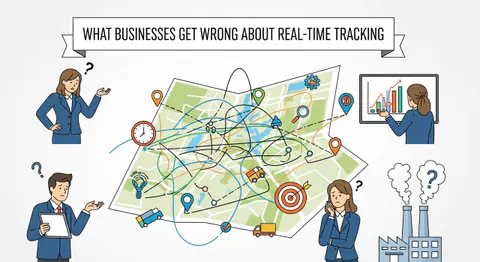
Real-Time Tracking Myths That Hold Fleets Back
Three real-time tracking myths debunked: that it is surveillance, too costly to set up, or unreliable, plus a practical plan to roll tracking out to your fleet.
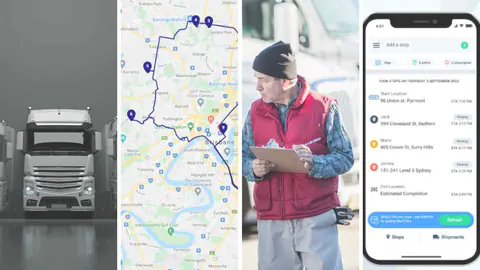
8 Ways to Cut Fleet Maintenance Costs
Eight ways fleet management software cuts maintenance costs, from predictive maintenance alerts and route optimization to driver monitoring and training.
5 Ways Fleet Management Software Cuts Fuel Use
How fleet management software improves fuel efficiency through smarter routes, driver behavior coaching, less idling, preventative maintenance and telematics.