How Driver Performance Software Improves Last Mile Delivery
Drafted with AI assistance and published by the Locate2u Editorial Team. See our editorial policy.
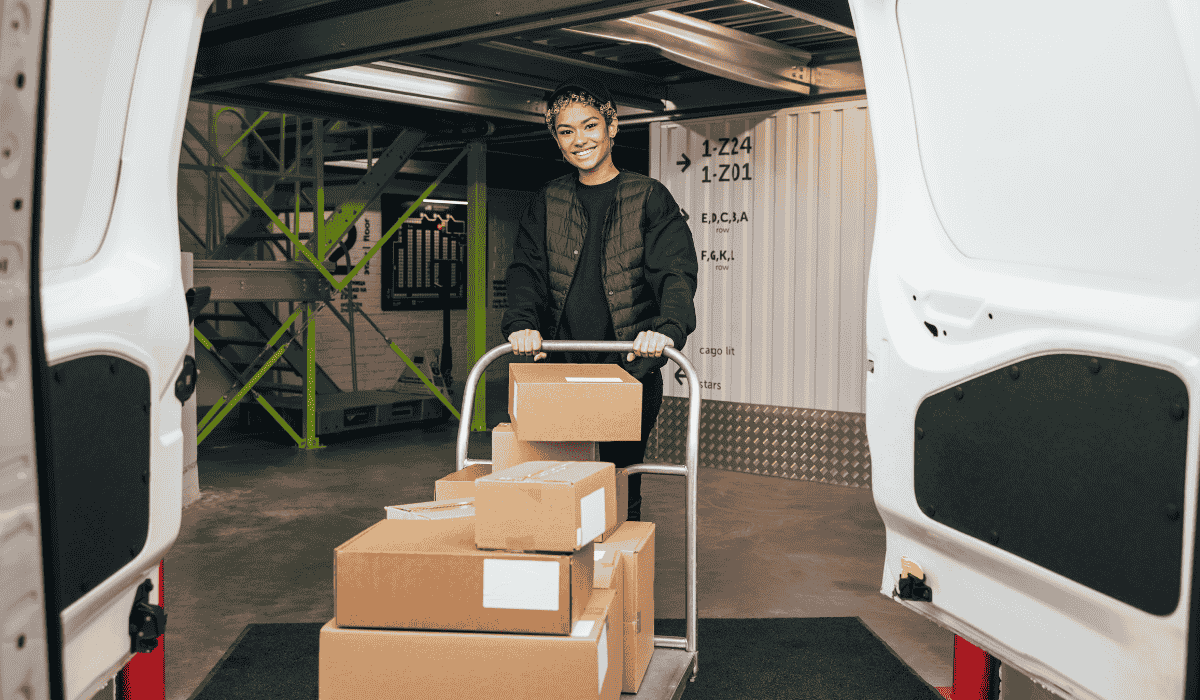
In last mile delivery, the driver is often the only person from your business the customer ever meets. How they drive, how they handle the parcel and whether they arrive on time shapes the customer's view of your whole operation.
Driver performance software gives you a clear view of how that is going. It takes the data your drivers already generate during a shift, from stop updates and GPS positions to proof of delivery and customer ratings, and turns it into a picture of each driver, route and day.
In Locate2u, that data comes from across the delivery management platform. This guide covers what driver performance software measures, how to use it fairly, and what to do with the results.
What driver performance software measures
Driver performance covers more than speed. Most tools group their data into four areas.
Delivery performance
This is how well the driver completes the route:
- Arrivals inside the customer's time window.
- Deliveries completed on the first attempt.
- Failed deliveries and the reasons recorded for them.
- Time spent at each stop compared with the plan.
- Stops completed per hour on the road.
The last one is a useful single measure of productivity. Our article on stops per driver hour explains how to use it.
Driving behavior
With a vehicle tracking device fitted, software can log harsh braking, rapid acceleration, sharp cornering and speeding events. Locate2u's fleet management software turns these into individual driver safety scores, updated daily, and exportable reports for insurers and compliance audits.
Customer feedback
After a delivery, customers can be asked to rate the experience. Locate2u's proof of delivery tools send a one-tap rating by SMS and show average ratings by driver, region and time period.
Proof quality
A delivery is only as good as its record. Software shows whether drivers are capturing clear photos, signatures and notes, so you can spot gaps before a dispute exposes them.
Why it matters in the last mile
The last mile is where small problems become visible to customers. A driver who regularly arrives late, leaves parcels in the wrong place or drives aggressively in a branded van affects your reputation every day.
Without data, you usually hear about these problems through complaints, long after the pattern started. With driver performance software, you see the pattern early, while it is still a coaching conversation rather than a lost customer.
It also works the other way. The data shows you who your best drivers are, so you can recognize them and learn from how they work.
How to use it fairly with drivers
Performance data can build trust or destroy it, depending on how you introduce and use it. Here is what tends to work.
Tell drivers before you switch it on
Explain what is measured, why, and who can see it. Drivers who find out about monitoring after the fact will assume the worst. Check the privacy and workplace surveillance rules in your region, and put your approach in writing.
Separate driver problems from planning problems
A driver who is late every afternoon may simply have a route that is impossible to complete on time. Before you blame the driver, check the plan. If several drivers on similar routes show the same pattern, the problem is the plan, the service times or the time windows you promised.
Compare like with like
A driver doing apartment deliveries in the city center will never match the stops per hour of a driver on a suburban route. Compare drivers on similar work, or compare each driver against their own trend over time.
Look at trends, not single days
Everyone has a bad shift. One late day or one low rating means little. A slow decline over several weeks is worth a conversation.
Give ratings context
Customers sometimes rate the driver for things outside their control, such as a late order or a damaged product. Read the comments behind low scores before acting on them. Our guide on how to respond to a bad delivery driver rating walks through this.
Let drivers see their own data
Drivers improve faster when they can see what you see. Share individual results privately, and ask for their side of the story.
What to do with the data
Collecting data is the easy part. The value comes from what you do next.
Set a regular review
Pick a fixed time each week to look at the numbers. Keep it short and focused on a handful of measures. Flag anything that has changed, and ignore anything that has not.
Coach, starting with a question
When a driver's results slip, start by asking what is going on. There is often a reason, such as a new customer with difficult access or a vehicle problem. Agree on one thing to change, then check the data again in a few weeks.
Fix the plan when the pattern is shared
If stops in one area always take longer than planned, update the service time. If one zone always runs late, adjust the zone or the time windows you offer. Performance data is often the best input you have for better routes.
Target training
Use the data to aim training where it is needed. If proof of delivery photos are unclear, a short session on what a good photo looks like will help more than a general refresher. Our list of proof of delivery best practices is a good starting point.
Recognize good work
Leaderboards and incentives work best when they reward the things you want more of, such as safe driving and happy customers. Locate2u lets you compare driver results across the team and use rating data for driver leaderboards and incentive programs. Celebrate improvement, not just the top spot.
Act on safety quickly
Repeated speeding or harsh braking is a risk to the driver, the public and your business. Raise it promptly and privately. For a wider look at safety, see our guide to improving driver safety through fleet management.
Mistakes to avoid
- Measuring everything. Too many numbers bury the few that matter.
- Rewarding one number. Push only for stops per hour and you may get rushed, unsafe driving or careless drop-offs.
- Public shaming. Posting a list of the worst performers damages morale and rarely changes behavior.
- Ignoring driver input. Drivers know the routes better than anyone. Their feedback should shape how you read the data.
Using driver data well
Driver performance software is most useful when it is used to support drivers, not watch them. Measure what drivers can control, share the results openly, and use the patterns to improve your plans as much as your people.
Done well, it leads to safer driving, more first-time deliveries and customers who notice the difference. For more on day-to-day driver management, see how to manage your drivers.
If you want to see how this looks with your own drivers, request access to Locate2u.

Related Articles
What Is Delivery Management Software?
What delivery management software is, the core features to expect, the benefits for delivery businesses, how to choose a platform and where the market is going.
The Future of Proof of Delivery: Photos and Beyond
How proof of delivery is moving beyond paper signatures to photos, GPS timestamps and AI checks, and how to choose the right POD setup for each risk level.

How Proof of Delivery Beats Porch Pirates
Package theft hits delivery businesses as hard as customers. How proof of delivery, live tracking, safer drop-offs and driver training cut porch piracy losses.