Curbside Delivery Meaning: How It Works and How to Run It Well
Drafted with AI assistance and published by the Locate2u Editorial Team. See our editorial policy.
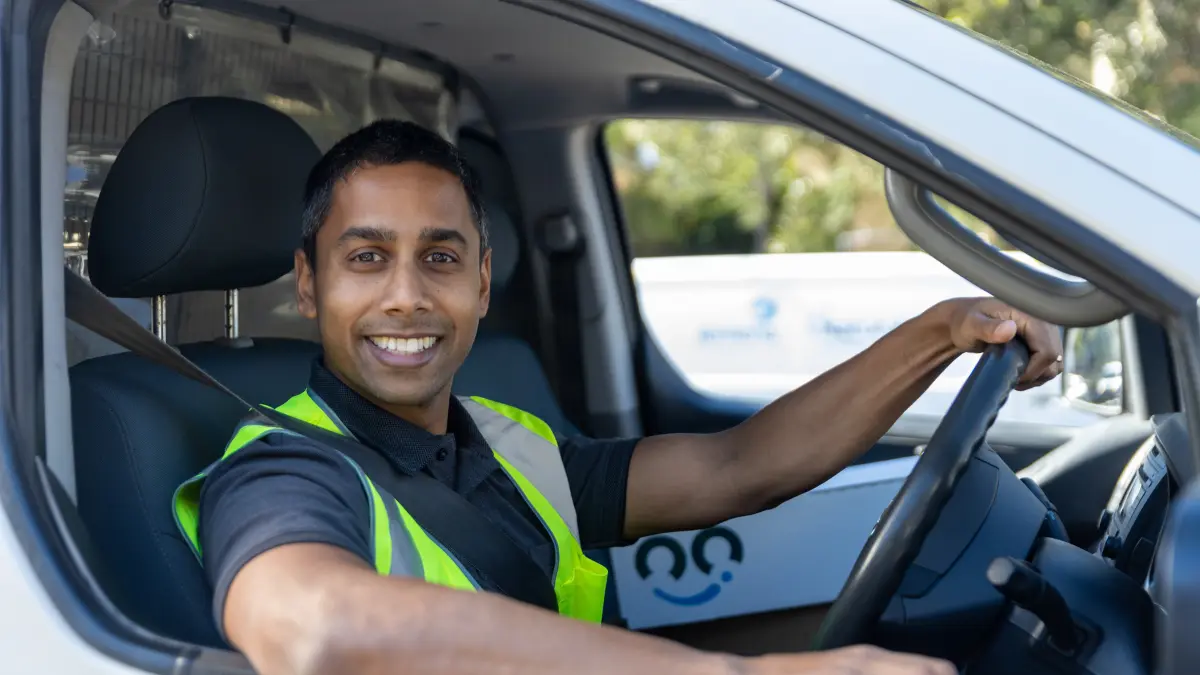
Curbside delivery sounds simple, but the term gets used for two different things.
Sometimes it means a store or restaurant bringing your order out to your car. Other times it means a carrier delivering your order to the curb outside your home, and no further.
Both are common, both are easy to get wrong, and both live or die on timing and communication. This guide explains what curbside delivery means in each case, how it works for the business and the customer, and how to run it well day to day.
What curbside delivery means
At its core, curbside delivery means the handover happens at the curb rather than inside a building.
In Australia and the UK you will often see it spelled "kerbside." The meaning is the same.
The two versions you will run into are:
- Curbside pickup. The customer orders ahead, drives to the store or restaurant, parks, and a staff member brings the order out to the car. Retailers and restaurants often call this curbside delivery too, even though the customer is the one traveling.
- Curbside delivery to an address. A driver delivers the order to the curb, the end of the driveway or the nearest accessible point outside the property. The customer takes it from there. This is common for bulky items, building supplies and freight.
If you run deliveries, it pays to be clear about which one you are offering, because customers often assume more than the service includes. Clear definitions in your checkout and confirmation emails prevent a lot of awkward conversations at the curb.
The rest of this guide covers both, and where delivery management software takes the guesswork out of each.
How curbside pickup works
For the customer, curbside pickup usually looks like this:
- They place an order online or by phone and choose curbside pickup.
- They get a confirmation, then a message when the order is ready.
- They drive to the store, park in a marked bay and let the store know they have arrived, usually by text, app or a phone call.
- A staff member checks their name or order number and brings the order to the car.
For the business, there is more going on behind the scenes. Someone has to pick the order, stage it somewhere sensible, watch for arrivals and get out to the car quickly.
The customer judges the whole experience on one thing: how long they sat in the parking lot waiting.
How curbside delivery to an address works
When a business sells curbside delivery to an address, the driver's job ends outside the property.
The driver unloads the item at the curb, driveway or nearest safe point, the customer checks it, and the driver records the handover. The driver does not carry it inside, unpack it or remove packaging.
This service level sits at the bottom of a ladder that most delivery businesses offer:
- Curbside: delivered to the curb or driveway outside.
- Threshold: brought to the front door, garage or first doorway. Our guide on threshold delivery explains this level in more detail.
- Room of choice: carried inside to the room the customer chooses.
- White glove: carried in, unpacked, assembled or installed, with packaging taken away. See what white glove delivery means for the full picture.
Curbside is usually the cheapest of these because it takes the least time and often only one driver. The trade-off is that the customer needs a plan to get a heavy or awkward item the rest of the way.
Why businesses offer curbside
For a store or restaurant, curbside pickup lets customers buy without coming inside, while the business avoids the cost of a driver and vehicle. It works well for groceries, takeout food, pharmacy orders and bulky retail items.
For a delivery operator, curbside delivery keeps stop times short and predictable. A driver who does not need to navigate stairs, lifts or tight hallways can finish more stops per shift, and you can price the service to match.
For customers, curbside is convenient and usually cheaper. It also suits people who prefer minimal contact, which overlaps with contact-free delivery.
Running curbside pickup well
Good curbside pickup is mostly about removing waiting time. Here is where to focus.
Quote a realistic ready time
Do not promise a ready time your team cannot hit at your busiest hour. A customer who arrives on time and then waits is far more annoyed than one who was told to come a little later.
Make the bays obvious
Use clear signage, numbered bays and simple instructions in the ready message. "Park in any bay marked Pickup and reply with your bay number" removes most of the confusion.
Make arrival easy to signal
Give customers one way to say they have arrived, and make sure someone is actually watching that channel. A phone number that rings out behind a busy counter does not count.
Stage orders by pickup time
Keep ready orders in one place, labeled clearly, and sorted by expected arrival. Chilled and frozen items need their own staging area so they are not sitting out.
Check identity for high-value or restricted items
For alcohol, medication or expensive products, confirm the name and order number, and check ID where the law or your policy requires it. Train staff to do this every time, not just when it feels necessary.
Running curbside delivery well
When your drivers are the ones doing curbside drop-offs, the challenges move to the customer's address.
Spell out the service level before the order ships
Say plainly at checkout and in the confirmation: "Your order will be delivered to the curb or driveway. The driver cannot bring it inside." Customers who know this in advance arrange help. Customers who find out at the curb leave bad reviews.
Agree a delivery window and keep the customer posted
Curbside drop-offs for bulky items usually need someone home to receive them. Give a realistic delivery window, then send updates as the driver gets closer so the customer is outside when the truck arrives.
A live tracking link and an automatic "driver is nearby" message do more for this than any phone call. Locate2u's real-time tracking generates a branded tracking page for each delivery, with a live map and ETA, and sends the link by SMS or email.
Confirm access and drop-off point
Collect delivery notes at booking: gate codes, steep driveways, where the truck can safely stop, and whether the item can be left unattended. Make sure the driver sees those notes before arriving.
Inspect and record the handover
Have the driver and customer check the item together at the curb before the driver leaves. Any damage is far easier to resolve when it is spotted on the spot.
Then record the handover with a photo of the item where it was left, a signature where needed, and a note of anything unusual. A proof of delivery app attaches timestamped, geotagged photos and signatures to the job record, so you have evidence if there is a dispute later.
Plan for the item the customer cannot move
Decide in advance what drivers do when the customer cannot get the item off the curb. Some businesses offer an upgrade to threshold delivery on the spot. Others simply make the limitation clear and stick to it. Either is fine, as long as drivers know the rule.
Common curbside mistakes
- Calling a service "curbside delivery" without explaining what the driver will and will not do.
- Sending a ready or arrival message that does not match reality.
- Leaving bulky items unattended at the curb without the customer's permission.
- Skipping the handover photo because the drop-off looked straightforward.
- Treating curbside as an afterthought during peak periods, when it needs the most planning.
For bulky orders in particular, our guide to handling big and bulky last mile deliveries covers vehicle, crew and scheduling decisions in more depth.
Making curbside work
Curbside delivery means the handover happens outside, at the car or at the curb. That makes it fast, simple and affordable, but only when expectations are set clearly and the timing works.
Define the service in plain words, keep customers updated as the order gets close, and record every handover. Do those three things consistently and curbside becomes one of the easiest services you offer.
If you are adding curbside to your services, request access to Locate2u and see how ETA updates and handover records fit your operation.

Related Articles
What Is Delivery Management Software?
What delivery management software is, the core features to expect, the benefits for delivery businesses, how to choose a platform and where the market is going.
The Future of Proof of Delivery: Photos and Beyond
How proof of delivery is moving beyond paper signatures to photos, GPS timestamps and AI checks, and how to choose the right POD setup for each risk level.
How Proof of Delivery Beats Porch Pirates
Package theft hits delivery businesses as hard as customers. How proof of delivery, live tracking, safer drop-offs and driver training cut porch piracy losses.