10 Reasons to Use Delivery Planning Software
Drafted with AI assistance and published by the Locate2u Editorial Team. See our editorial policy.
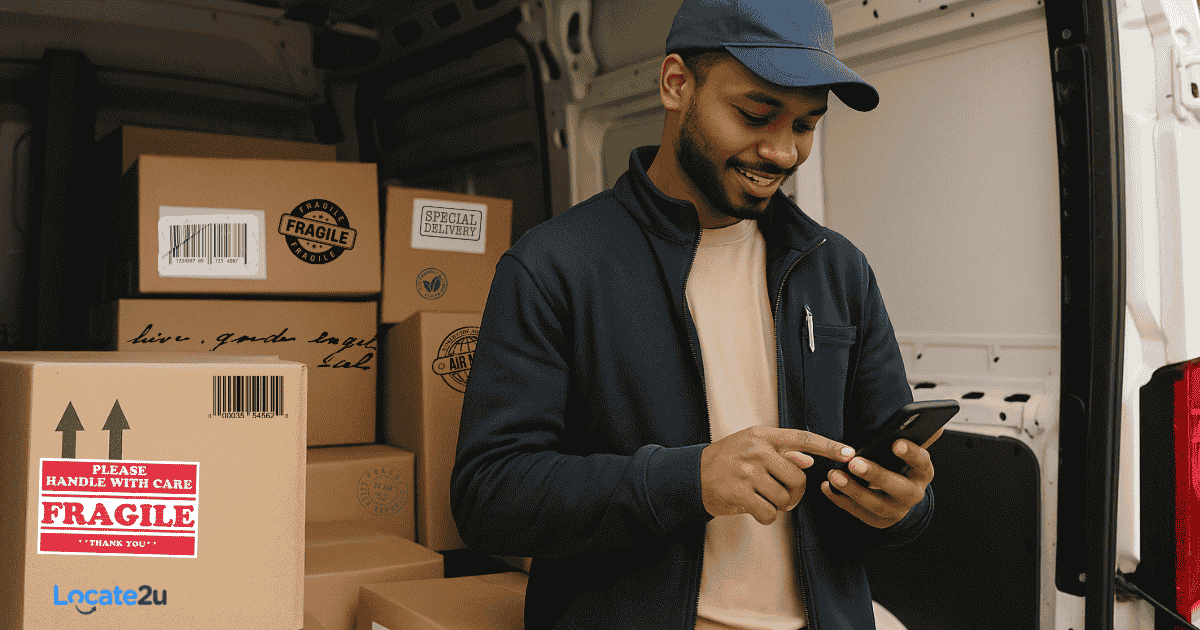
Most delivery businesses start planning with a spreadsheet, a map and someone who knows the area well. That works until the order list grows, the team adds another van, or the person who does the planning takes a week off.
Delivery planning software takes the list of orders for a day, works out which driver should take each one and in what order, and sends the result to the drivers. It sits at the center of a wider delivery management platform that also handles bookings, tracking and proof of delivery.
If you are weighing whether it is worth the switch, here are ten practical reasons, plus a few signs you might not need it yet.
1. Planning stops eating your morning
Manual planning means dragging stops around a map, checking addresses and guessing at drive times. It is slow, and it only gets slower as volume grows.
Software does the sequencing for you. SuperPharmacy, an Australian online pharmacy, went from about an hour of manual route planning a day to around ten minutes, according to its Locate2u case study.
The time you get back goes into the work software cannot do, such as talking to customers and sorting out problems.
2. Time windows actually get kept
A customer who asked for a morning delivery does not care that the route was efficient if the van arrives after lunch.
Good planning software treats delivery windows as rules, not suggestions. Locate2u's route optimization engine plans around time windows, vehicle capacity, traffic and driver availability, so the sequence it gives you is one your drivers can actually run.
3. Vans are loaded to fit
Overloading a vehicle means a second trip back to the depot. Underloading it means you paid for a driver and a van to run half empty.
When the software knows each vehicle's load limit, it spreads orders across the fleet so every vehicle leaves with a load it can carry. You stop finding out at the loading dock that the plan does not fit.
4. Workload is shared fairly
On a manual plan, the most experienced driver often ends up with the hardest run because they can cope. Over time that leads to resentment, overtime and burnout.
Planning software can balance stops across drivers based on capacity, working hours and skills. Everyone gets a fair day, and you can see at a glance who has room for one more job.
5. The plan survives last-minute changes
No delivery day goes exactly to plan. A rush order comes in, a customer cancels, a driver calls in sick.
With a paper plan, each change means starting again or making a guess. With software, you add or move a job and the affected routes are re-optimized, with new ETAs pushed to drivers. Our guide to smarter delivery scheduling covers how to leave room in the day for these changes.
6. Fewer kilometers and less fuel
Backtracking across town and crossing paths with another driver are easy to miss on a manual plan. They show up later as fuel bills and overtime.
Better sequencing cuts the distance each van travels for the same set of stops. Zoning drivers into territories helps too. For more on this, see how to reduce fuel costs with smart delivery planning.
7. Customers get accurate ETAs
When the plan exists only in a planner's head, nobody can tell a customer when their delivery will arrive. That turns into phone calls to the office and missed deliveries when nobody is home.
Once routes are planned in software, each stop has an ETA. Locate2u can send customers a branded tracking link so they can follow the driver on a live map, with no app to download.
8. Drivers get the plan on their phone
A printed run sheet is out of date the moment something changes. Drivers end up calling the office to check what is next.
With a delivery driver app, each driver sees their stops in order, with customer notes and time windows. When dispatch changes the plan, the update appears on their screen. One tap opens navigation in the maps app they prefer.
9. Every stop has a record
A plan is only half the job. You also need to know each delivery happened.
When planning and proof of delivery live in the same system, every stop on the route ends with a timestamped, GPS-tagged record: a signature, a photo, notes, or a failure reason if it could not be completed. That makes disputes much quicker to settle.
10. You get data to plan better next week
Manual planning leaves no trail. You cannot easily tell which routes run late, which stops always take longer than expected, or which drivers are stretched.
Planning software records what was planned and what happened. Locate2u's reporting tracks on-time rates, cost per delivery and driver utilization, so you can adjust service times, zones and staffing from evidence rather than gut feel.
When you might not need it yet
Software is not always the answer. If you run one vehicle, deliver to the same handful of customers every week and rarely get changes during the day, a simple list may be enough for now.
The signs you have outgrown manual planning are usually clear:
- Planning takes longer each week, or only one person knows how to do it.
- Customers regularly call to ask where their delivery is.
- Drivers phone the office several times a day for updates.
- Late deliveries and second attempts keep coming back.
- You cannot answer basic questions such as which route costs the most to run.
If several of these sound familiar, it is worth understanding the difference between route planning and route optimization before you compare tools, so you know which problem you are solving.
How to get started
You do not need to change everything at once. Start with the part that hurts most, usually building the daily plan, and add tracking, customer notifications and proof of delivery once the team is comfortable.
Clean up your data before you start. Accurate addresses, realistic time on site at each stop and correct vehicle limits make a bigger difference to the quality of the plan than any setting in the software.
Then run the new plan alongside your old method for a short period. Ask drivers what does not work on the road. Their feedback will tell you where your assumptions need adjusting. Our article on delivery planning strategies has more on building good habits around the tool.
Where to start
Delivery planning software is not about replacing the people who know your routes. It takes the repetitive sequencing work off their plate, keeps the plan current when things change, and gives drivers and customers the same picture of the day.
The payoff shows up in the small things: fewer phone calls, fewer second attempts, fairer days for drivers and a plan that does not live in one person's head.
To see how planning software would handle your own daily runs, request access to Locate2u.

Related Articles
What Is Delivery Management Software?
What delivery management software is, the core features to expect, the benefits for delivery businesses, how to choose a platform and where the market is going.
The Future of Proof of Delivery: Photos and Beyond
How proof of delivery is moving beyond paper signatures to photos, GPS timestamps and AI checks, and how to choose the right POD setup for each risk level.

How Proof of Delivery Beats Porch Pirates
Package theft hits delivery businesses as hard as customers. How proof of delivery, live tracking, safer drop-offs and driver training cut porch piracy losses.